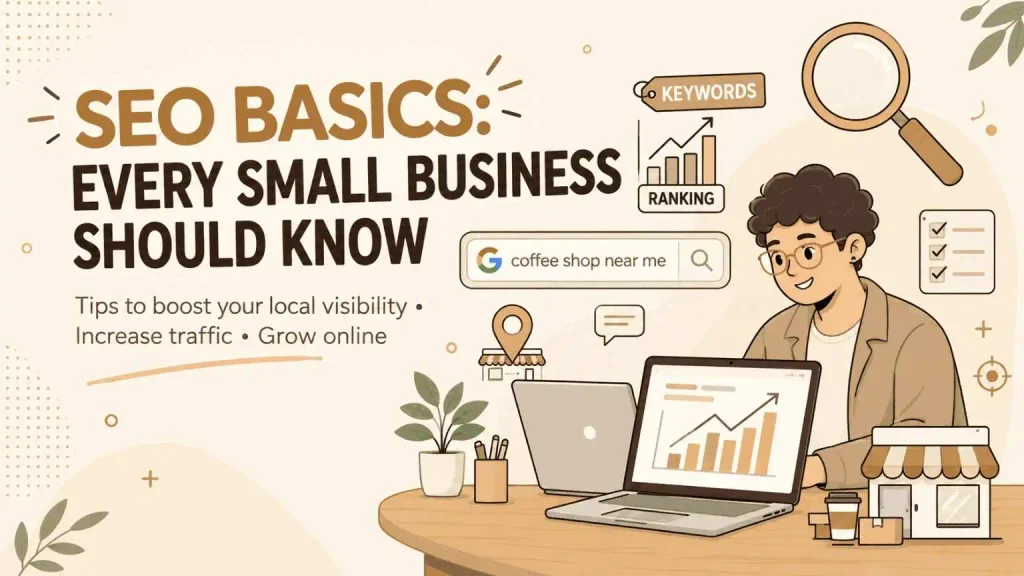
SEO Basics Every Small Business Should Know Having a product or service is one part of running a successful small business. It is important to make your business easy for potential customers to find online, especially when they are searching for the products or services you provide. Whether you run a café, salon, clothing store, restaurant, local shop, or service–based business, having a presence can help you connect with potential customers. This is where SEO basics every small business should know become useful. SEO, also known as Search Engine Optimization, is the process of enhancing a website and its online presence to help search engines recognize its content and make it easier for potential customers to discover and access products, services, and information that suit their individual needs. SEO may sound technical at first. However, beginners are not required to master every aspect from the beginning. Understanding a few principles and applying them consistently can help create a stronger website. What Is SEO? SEO focuses on making a website clearer and more accessible, allowing search platforms to interpret its pages while helping users quickly locate relevant and helpful content. For example, suppose someone searches for “bakery near me.” A local bakery with website information, accurate business details, relevant content, and a properly maintained online presence may have an opportunity to appear in related search results. Search engines rely on automated technologies to find, analyze, and categorize web pages. Various factors determine which pages appear in response to a user’s search query. SEO is not simply about adding keywords to a webpage. Effective SEO involves developing a website that provides valuable content, is easy to navigate, remains accessible to users, and meets the needs of its target audience. Why Is SEO Important for Businesses? Compared to large companies, small businesses often operate with tighter advertising budgets. Organic search offers an alternative way to connect with potential customers who are actively seeking relevant products or services online. 1. It Helps People Discover Your Business Many consumers rely on search engines to research their options before choosing a store, restaurant, booking service, or product. A strong presence in search results can help your business reach new audiences and attract people who may not have known about it before. 2. It Can Attract Relevant Visitors SEO helps attract visitors who are actively looking for products, services, or information relevant to your business. For instance, a person searching online for “women’s clothing boutiques in Thrissur” may already be looking for a nearby store that sells women’s apparel. Well-crafted and relevant website content enables visitors to gain a clear understanding of your business’s products, services, and offerings. 3. It Can Strengthen Your Online Presence A clearly structured website helps visitors learn about your business and its offerings. Including comprehensive service descriptions, correct contact details, relevant content, and current business information allows potential customers to find what they need easily and make confident choices. 4. It Is Useful for Local Businesses Businesses that depend on customers from an area can benefit from local SEO. People often search for businesses using location, opening hours, services, or nearby terms. A restaurant, salon, café, clinic, or local store can use SEO to make important information easier for nearby customers to find. For businesses looking to strengthen their online presence, the best digital marketing expert in Thrissur can help develop effective digital marketing strategies that connect with the right audience. 5. It Can Provide Long-Term Value Paid advertisements may no longer generate traffic once a campaign comes to an end, whereas valuable SEO content can continue attracting visitors from search engines over time. However, SEO does not guarantee rankings. Search results can. Websites need regular improvement to remain useful and competitive. SEO Basics Every Small Business Should Know SEO covers many areas, but beginners can start by understanding the following fundamentals. 1. Research the Keywords Your Customers Use Keywords refer to the words and phrases people use in search engines to find relevant information, products, or services online. A salonZ for example, might discover searches such as: The goal is not to collect as many keywords as possible. Instead, choose terms that genuinely match your products, services, audience, and location. Think about the words your customers would naturally use when searching for your business. 2. Understand Search Intent Search intent refers to the reason behind a person’s search. For example, someone searching “what is marketing?” is probably looking for an explanation. Someone searching “marketing course, near me” may be looking for a course or training provider. Knowing the difference helps you make content that fits what people really want. Before creating a webpage, ask: “Consider what the user is actually looking for when they enter that search term and make sure your page provides the information they need.” Your content should then give an answer. 3. Improve Your On-Page SEO On-page SEO means changes you make directly to your webpages. Important elements include: Make the main subject of each page clear. Avoid repeating keywords in a way. Search engines and readers should understand the topic without having to read sentences. 4. Create Useful and Original Content Content should be made mainly to help your audience. For example, a local restaurant could publish articles about: Content gives a business a chance to answer customer questions and show knowledge about its products or services. Create articles to provide meaningful information rather than simply inserting keywords. Content that answers readers’ questions and offers genuine value is more effective than writing that repeatedly uses the same phrases. 5. Write Clear Page Titles and Meta Descriptions A page title shows users and search engines what a webpage contains. For example: Less descriptive: “Services” Descriptive: “Professional Bridal Makeup Services in Thrissur” A meta description gives a short summary of the webpage. Writing a relevant description can help users see what they may find before they visit the page. 6. Use Clear Headings Headings make online content easier to read and scan. Use a main heading and